
Reviewed by Dr. Jalpa Birdi, DDS
Losing a tooth, whether from decay, injury, or gum disease, creates more than just a gap in your smile. It introduces daily challenges that affect fundamental aspects of your life, including how you eat, speak, and feel confident in social settings. These issues can make even simple moments feel unnecessarily difficult.
At Birdi Dental in Avondale Estates, Dr. Jalpa Birdi helps patients navigate restorative dentistry solutions that transform their oral health. With specialized implant training and a gentle, patient-centered approach, Dr. Birdi guides you through every phase of the dental implant process, ensuring you feel informed, comfortable, and confident about restoring your smile.
Understanding Dental Implants
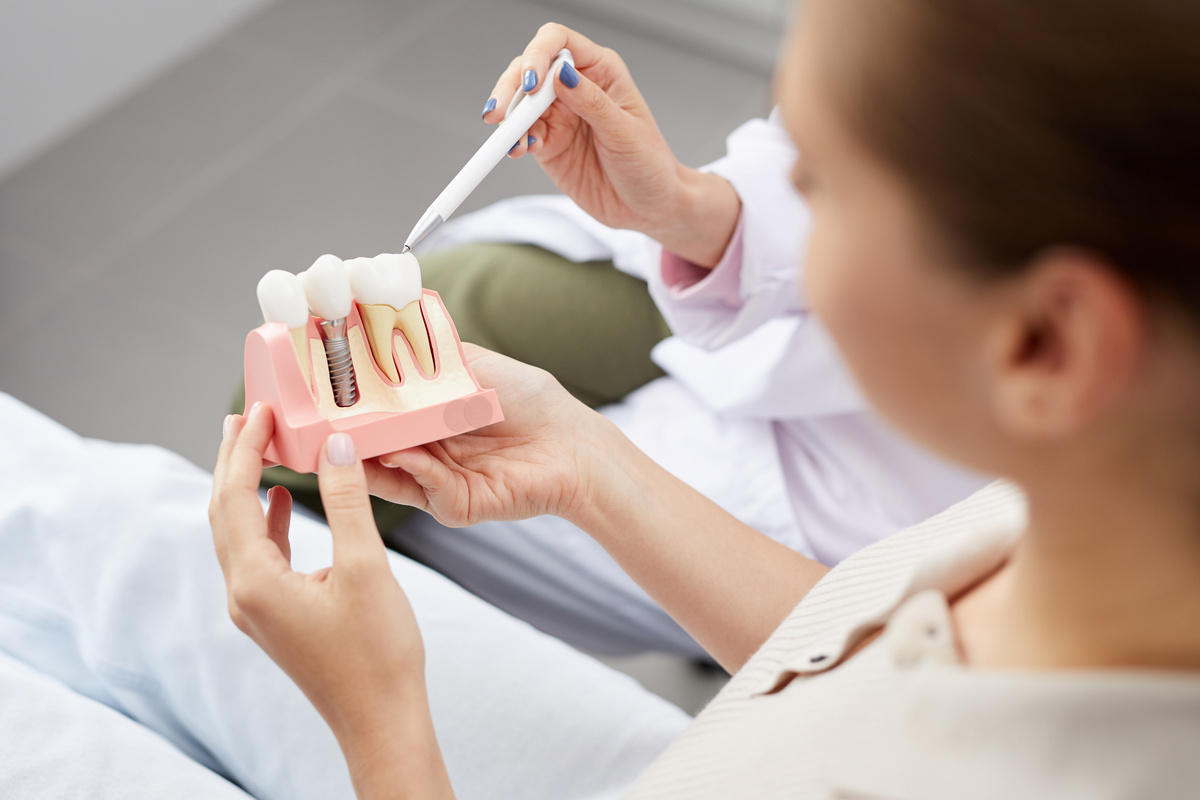
Dental implants are titanium-based artificial tooth roots that anchor replacement teeth, such as crowns or bridges. They integrate directly with your jawbone, creating a permanent, stable foundation. Essentially, the implant functions as a strong base, much like the foundation of a house, allowing the replacement tooth to look, feel, and work like a natural tooth.
Unlike traditional bridges or dentures, dental implants do not rely on neighboring teeth for support. They stand independently, preserving your healthy teeth while helping prevent the bone loss that often follows tooth extraction. This makes them one of the most durable and natural-looking options for replacing missing teeth.
Types of Dental Implants
Not every patient needs the same solution, so implants are available in a few different configurations depending on how many teeth need to be replaced.
- Single-tooth implant: replaces one missing tooth with an individual implant and crown, leaving the neighboring teeth untouched.
- Implant-supported bridge: two or more implants anchor a fixed bridge that replaces several teeth in a row.
- Full-arch replacement: four to six implants support a complete set of upper or lower teeth for patients missing most or all of the teeth in one arch.
Dr. Birdi determines which configuration fits your situation during your initial consultation, based on how many teeth you are replacing and the condition of your jawbone.
Benefits That Go Beyond Appearance
While the aesthetic improvement is obvious, cosmetic dentistry solutions like dental implants offer functional benefits that improve your quality of life. According to the American Academy of Implant Dentistry, implant restorations have reported success rates of over 95%, making them a reliable long-term investment in your oral health. You can look forward to confidently eating the foods you love, speaking clearly without hesitation, and smiling freely in every social situation, from photos to everyday conversations.
Am I a Candidate for Dental Implants?
Most healthy adults with one or more missing teeth are potential candidates, but a few general factors help determine whether implants are the right fit for you.
- Having one or more missing teeth and a fully developed jawbone.
- Having enough bone density to support an implant, or being open to bone grafting if it is needed.
- Maintaining generally healthy gum tissue free of active, untreated gum disease.
- Not using tobacco, since smoking can slow healing and affect long-term implant success.
As with any surgical procedure, dental implants carry a small risk of infection or delayed healing, which is why Dr. Birdi reviews your oral and overall health carefully before recommending treatment.
Initial Consultation and Treatment Planning
Your first step toward dental implants is a thorough evaluation with Dr. Birdi. She will assess your oral health, review your complete medical history, and gain a clear understanding of your treatment goals. This consultation is never rushed. Dr. Birdi dedicates ample time to fully address your questions, explain the entire process in detail, and ensure you are completely informed about every phase of your journey.
Advanced imaging technology helps create a precise treatment plan tailored to your needs. X-rays and 3D scans reveal the condition of your jawbone, the position of nerves and sinuses, and the optimal placement for your implant. If you have been missing a tooth for an extended period, you may need bone grafting to strengthen the area before implant placement. Dr. Birdi walks you through these considerations, helping you make informed decisions about your care.
Addressing Anxiety Before It Starts
Many patients feel anxious about dental procedures, especially those that sound surgical. Dr. Birdi understands these concerns and offers sedation dentistry options to help you stay relaxed throughout treatment. From nitrous oxide to oral sedation, there are methods available to make your experience as comfortable as possible.
The Implant Placement Procedure
On the day of your implant placement, you will arrive at Birdi Dental knowing exactly what to expect. Local anesthesia numbs the treatment area, and if you have chosen sedation, you will feel calm and at ease. Dr. Birdi carefully places the titanium implant into your jawbone through a small incision in your gum tissue. The precision of this placement is crucial for long-term success, which is why Dr. Birdi’s specialized implant training makes such a difference in outcomes.
The procedure itself typically takes one to two hours per implant, depending on the complexity of your case. You might feel some pressure during the process, but you should not experience pain. Once the implant is positioned, Dr. Birdi closes the incision with stitches that dissolve on their own over the following weeks.
What Happens After Placement
Following your procedure, you will receive detailed aftercare instructions to support proper healing. Some swelling and mild discomfort are normal and are typically managed with over-the-counter pain relievers and ice packs. Most patients return to work within a day or two, though you will want to stick to soft foods while your mouth heals.
Osseointegration: The Healing Phase
Osseointegration is the process by which your jawbone grows around and fuses with the titanium implant, creating a stable foundation for your new tooth. This phase typically takes three to six months, though the exact timeline varies based on factors like your overall health, bone density, and whether you needed bone grafting.
During this period, the implant remains beneath your gum tissue, hidden from view. You will not have a visible tooth yet, though Dr. Birdi may provide a temporary solution to maintain your smile’s appearance. While waiting might feel frustrating, this healing time is essential for ensuring your implant can support the forces of chewing for years to come. A long-term cohort study published in Clinical Implant Dentistry and Related Research, which followed nearly 11,000 implants for up to 22 years, found a cumulative survival rate of 98.9% at three years, underscoring how reliably implants integrate when given adequate time to heal.
Abutment Placement and Crown Attachment
Once osseointegration is complete, you will return for a minor procedure to attach the abutment, a small connector piece that links your implant to your crown. This appointment is much simpler than the initial placement. Dr. Birdi reopens the gum tissue, attaches the abutment to the implant, and allows the area to heal for a few weeks.
After your gums heal around the abutment, it is time for the final restoration. Dr. Birdi takes impressions of your mouth to create a custom crown that matches your natural teeth in size, shape, and color. When your crown is ready, typically within two to three weeks, you will return for the final placement. The crown attaches to the abutment, completing your restoration and giving you back a fully functional tooth.
Life With Your New Smile
Once your implant is complete, caring for it is straightforward. Brush twice daily, floss around the implant just like your natural teeth, and keep up with regular preventive dentistry checkups and cleanings. With proper maintenance and good oral hygiene, your dental implant can last for many years. Many patients find that within weeks, they forget which tooth is the implant because it feels so natural.
What Does It Cost? Financing and Insurance Options
Cost is one of the biggest questions patients have before committing to dental implants, and the answer depends on several factors, including how many teeth you are replacing, whether bone grafting is needed, and which type of restoration you choose.
Birdi Dental offers financing options designed to make treatment more manageable, and our team can also help you understand how your dental insurance may apply toward your implant treatment. Discussing cost openly during your consultation helps you plan for treatment with confidence rather than uncertainty.
Schedule Your Consultation at Birdi Dental in Avondale Estates
Restoring your smile does not have to feel overwhelming or mysterious. Dr. Jalpa Birdi and our team at Birdi Dental provide clear guidance, compassionate care, and expert treatment throughout your implant journey. We are here to answer your questions, address your concerns, and help you get the confident, healthy smile you deserve.
Ready to take the first step? Contact us today to schedule your appointment and see how dental implants can change your life.
Frequently Asked Questions About Dental Implants
How long does the entire dental implant process take?
From your initial consultation to your final crown, the dental implant process typically takes three to eight months, depending on whether you need bone grafting and how your body heals during osseointegration. Dr. Birdi will give you a personalized timeline once she evaluates your specific needs.
Is getting a dental implant painful?
Most patients feel little to no pain during the placement procedure itself, since local anesthesia numbs the treatment area and sedation options are available for those who feel anxious. Mild soreness or swelling afterward is normal and is usually managed with over-the-counter pain relievers and ice packs.
Am I still a candidate if I have been missing a tooth for a long time?
Yes, in many cases. Long-term tooth loss often leads to some bone loss in the jaw, but bone grafting can rebuild the area so it can support an implant. Dr. Birdi will evaluate your jawbone with imaging during your consultation to determine the best path forward.
Will insurance or financing help cover the cost of dental implants?
Coverage varies by plan, and many dental insurance policies provide at least partial coverage for parts of the implant process. Birdi Dental also offers financing options to help make treatment more manageable, and our team can walk you through what applies to your specific situation.
How long do dental implants last?
With proper oral hygiene, regular dental checkups, and good overall health, dental implants are designed to last for many years and often for a lifetime. Research following patients for decades has shown high long-term survival rates when implants are properly cared for.
What is the difference between a dental implant and a bridge or denture?
Unlike a bridge, which relies on neighboring teeth for support, or a removable denture, which sits on top of the gums, a dental implant is anchored directly into the jawbone. This means it does not require altering healthy adjacent teeth and helps preserve jawbone density over time.
About the Author: Dr. Jalpa Birdi, DDS
Dr. Jalpa Birdi is the founder of Birdi Dental in Avondale Estates, Georgia, where she provides restorative, cosmetic, and implant dentistry with specialized training in dental implant placement and restoration. Learn more about Dr. Birdi’s background and approach to patient care.